Together we can make a difference!
Never doubt that a small group of thoughtful, committed individuals can change the world; indeed it's the only thing that ever has. – Margaret Meade
We are looking for parents, teachers, and students who support advanced and gifted education for Rochester Community Schools in Michigan. Please subscribe to Rochester SAGE to receive updates.
Also, please visit the "How to Help" link in the upper right.
Northwestern University’s Midwest Academic Talent Search – Information
What is NUMATS?
NUMATS is Northwestern University’s Midwest Academic Talent Search (NUMATS). Started in 1982, NUMATS is a program of the Center for Talent Development (CTD) that offers above-grade-level testing for high-performing students in grades 3 through 9. This Talent Search approach is an extremely well-researched and respected program model in gifted education.
NUMATS uses tests intended for older students to provide a more accurate measurement of aptitude, because studies show that students who score in the top 10% on school achievement tests differ widely from average students in their abilities and educational needs. In-grade achievement tests just don’t accurately represent these gifted students’ potential.
Read more…
Northwestern University’s Midwest Academic Talent Search
Meeting the Needs of Gifted Students
FREE Forums for Educators and Parents See Flier: NUMATS MI Promo 11.29.11 FINAL
Special Guest Presenter: Rhoda Rosen, Center for Talent Development at Northwestern University
The first step in charting an effective academic program for gifted students is to assess their ability accurately. Above-grade-level testing is the best means available. High achievers hit the ceiling on standardized grade-level tests. They require a more advanced test, one designed for a higher grade level, to gain a true measure of where they are performing, and what they need moving forward. Knowing what a child is capable of doing, teachers can differentiate and tailor instruction to meet the student’s needs.
Join Rhoda Rosen, Associate Director of the Center for Talent Development at Northwestern University in an informative session to discuss the benefits of above-grade level testing as a critical assessment and planning tool.
Wednesday, December 7
Grand Rapids, MI, Kent ISD Educational Service Center, 2930 Knapp Street NE, Grand Room
11 a.m.
Parking in Lot 11
616 / 364 -1333
East Lansing, MI, Michigan State University, Communication Arts & Sciences Building
3:30 p.m.: Session for teachers, gifted coordinators,
school administrators
6 p.m.: Session for parents
Directions at http://www.cas.msu.edu/695-Directions-Home
517 / 432 – 2129
Thursday, December 8
Waterford, MI, Oakland Schools,
2111 Pontiac Lake Rd.
9 a.m.
248 / 209 – 2434
Rhoda Rosen directs the Northwestern University’s Midwest Academic Talent Search (NUMATS). In her forums she explains what is involved in above-grade-level testing and how students in grades 3 through 9 can participate. Most importantly, Dr. Rosen discusses the myriad interpretative and planning resources available once test scores are known. Her insights are valuable to any educator or parent committed to ensuring the development of an academically gifted child.
Spotlight on Giftedness – November 2011
A collection of news articles regarding gifted children and education for November 2011.
In November, many of the articles discussed the National Association for Gifted Children‘s State of the States in Gifted Education report. This report provides information on which states have laws regarding identification and education of gifted students.
Education Week had a few articles on gifted education, including this month’s top selection, What Gifted Students Need From You. (Free registration required to read article.)
Today, the National Association of Gifted Children estimates that nearly three million American students are gifted and talented. Teaching these students can be rewarding: They often learn new skills quickly, absorb oodles of information, take on leadership roles, and eagerly employ higher-order thinking skills. But to truly meet the needs of gifted students—especially those who, like Mark Zuckerberg and Lady Gaga, may have an independent streak—can be challenging. Here are some practical tips to help you get started:
- Find out what “gifted” means in your district or state.
- Help identify students who qualify for “gifted and talented programs”—and those who do not but might need individualized supports.
- Use data to differentiate instruction and create appropriate challenges.
- Focus on learning—not on grades.
- Support your students’ social and emotional learning.
There are more tips and their explanations in the article.
Many more great articles are provided in the links below! 
Read more…
Why Grades Don’t Matter to Me
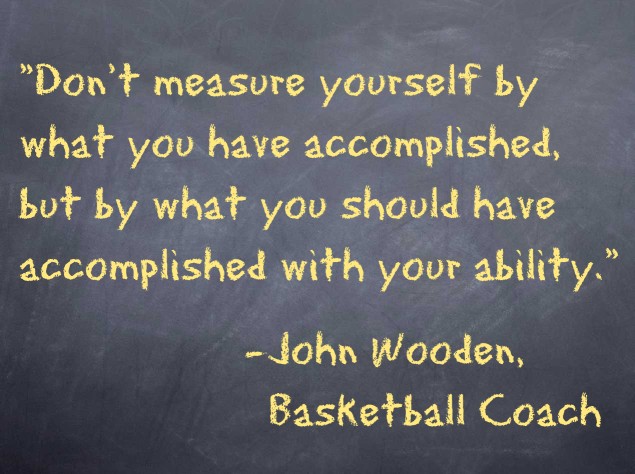
If I ran a school, I’d give the average grade to the ones who gave me all the right answers, for being good parrots. I’d give the top grades to those who made a lot of mistakes and told me about them, and then told me what they learned from them. – R. Buckminster Fuller, inventor and former Mensa International president
If you don’t make mistakes, you’re not working on hard enough problems. And that’s a big mistake. – Frank Wilczek, Nobel laureate in physics
Many times when I state that I advocate for advanced and gifted education in the Rochester Community Schools, I get a response like “Why should we provide extra education? Your child will get A’s and ace standardized tests. What more could you want?”
I won’t deny that there is some joy in being the parent of gifted children. You know their academic struggles will be few and it is fun to see your children succeed. But having a gifted child also raises questions and creates dilemmas.
The primary question when it comes to school, and it is really a question every parent should ask, is “Is my child learning?” And it is here that grades not only aren’t a reliable indicator, but actually can be misleading.
Read more…
Please pass this invite on to other parents and supporters of gifted students!
Please join us at the 7:00 PM Board of Education meeting on November 21, 2011 in the Harrison Room at the Rochester Community Schools Administration Building, 501 W. University, Rochester, Michigan 48307.
Some parents of advanced and gifted students in the district will be sharing their experiences with the School Board in order to inform of both successes and failures in meeting the needs of high achievers in our district.
We need your voice! If you are willing to speak before the Board of Education, please fill out the Rochester Community Schools Public Comment Placement form and email it to Christine Keener at ckeener@rochester.k12.mi.us before Tuesday, November 15. This is a great opportunity to make your voice heard in the company of other parents who want the right education for their children! If you will join us in speaking, please add a comment to this post or send me an email at RochesterSAGE (at) live.com.
If you prefer not to speak publicly, please come support us in the audience. We encourage you to bring your children so that the Board can see who is being impacted. Typically the Board also has a Chat With the Board starting at 6:30 PM. This is a good opportunity for you and your children to meet a couple members of the Board and informally talk with them about gifted education or other concerns.
Public comment should be over by 7:30 PM, at which point feel free to leave.
I hope to see you there! Let’s make our voices heard!
Together we can make a difference for advanced & gifted students!
The New MEAP Scores
The Michigan Department of Education released what last year’s MEAP Scores would be under the new cut scores. The new MEAP scores really underscore the differences between buildings in our district. Some of these differences are demographically based, but others are attributable to leadership and mentality. These differences should be examined closely by data and education experts. Why do some schools have many more students scoring advanced than others? Why is there a thirty point spread meeting expectations in some subjects between schools? These questions and others deserve answers.
The actual scores are in the rest of the article. All numbers are percents and “Meets Expectations” is Advanced + Proficient.
Read more…
Board of Education Elections: Tom Malysz
I have sent each Rochester Community Schools Board of Education candidate questions about Advanced & Gifted Education. Here are the questions and Tom Malysz‘s responses.
1) Do you believe the opportunities and education that exist for advanced and gifted students in Rochester Community Schools are sufficient? Why or why not?
2) What role do you believe the Board of Education should have in recommending or implementing gifted education options in our district?
3) What changes do you believe should be made to best meet the needs of high achievers based on your understanding of the surrounding community, the current finances, and the needs of RCS students?
4) What role should parents have in determining gifted education options for our district?
5) Should gifted education options be implemented district-wide or at the option of the principals and teachers?
6) Are you a supporter of the International Baccalaureate program and would you work to convert one or more elementary, middle, and high schools in RCS to the IB program?
Board of Education Elections: Beth Talbert
I have sent each Rochester Community Schools Board of Education candidate questions about Advanced & Gifted Education. Here are the questions and Beth Talbert‘s responses.
1) Do you believe the opportunities and education that exist for advanced and gifted students in Rochester Community Schools are sufficient? Why or why not?
2) What role do you believe the Board of Education should have in recommending or implementing gifted education options in our district?
3) What changes do you believe should be made to best meet the needs of high achievers based on your understanding of the surrounding community, the current finances, and the needs of RCS students?
4) What role should parents have in determining gifted education options for our district?
5) Should gifted education options be implemented district-wide or at the option of the principals and teachers?
6) Are you a supporter of the International Baccalaureate program and would you work to convert one or more elementary, middle, and high schools in RCS to the IB program?
Board of Education Elections: Pat Piskulich
I have sent each Rochester Community Schools Board of Education candidate questions about Advanced & Gifted Education. Here are the questions and Pat Piskulich‘s responses.
1) Do you believe the opportunities and education that exist for advanced and gifted students in Rochester Community Schools are sufficient? Why or why not?
2) What role do you believe the Board of Education should have in recommending or implementing gifted education options in our district?
3) What changes do you believe should be made to best meet the needs of high achievers based on your understanding of the surrounding community, the current finances, and the needs of RCS students?
4) What role should parents have in determining gifted education options for our district?
5) Should gifted education options be implemented district-wide or at the option of the principals and teachers?
6) Are you a supporter of the International Baccalaureate program and would you work to convert one or more elementary, middle, and high schools in RCS to the IB program?
Board of Education Elections: Jane Pierobon
I have sent each Rochester Community Schools Board of Education candidate questions about Advanced & Gifted Education. Here are the questions and Jane Pierobon‘s responses.
1) Do you believe the opportunities and education that exist for advanced and gifted students in Rochester Community Schools are sufficient? Why or why not?
2) What role do you believe the Board of Education should have in recommending or implementing gifted education options in our district?
3) What changes do you believe should be made to best meet the needs of high achievers based on your understanding of the surrounding community, the current finances, and the needs of RCS students?
4) What role should parents have in determining gifted education options for our district?
5) Should gifted education options be implemented district-wide or at the option of the principals and teachers?
6) Are you a supporter of the International Baccalaureate program and would you work to convert one or more elementary, middle, and high schools in RCS to the IB program?

 Rochester SAGE - Supporting Advanced & Gifted Education